
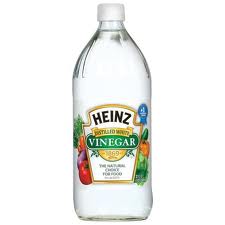
 Distilled or white vinegar is the most commonly used in commercial production for making pickles, ketchup and bottled salad dressings, among other products. The vinegar is made from distilled alcohol that is fermented. White vinegar is very strong and besides a limited use in cooking, it can be used for cleaning.
Wine Vinegars
 Red wine vinegar, as the same suggests, is made from red wine that is allowed to ferment. It’s one of the more popular vinegars with its sharp taste, making it great for vinaigrettes and salad dressings. It’s also great for meat marinades.
 Apple cider vinegar is made from pressed apples that are allowed to ferment to become alcohol and then vinegar. It has a mellow flavor that’s great in recipes. Unfiltered apple cider vinegar is known to have many medicinal properties.
 White wine vinegar, made from white wine, is more mellow than red wine vinegar and can be used interchangeably in recipes, depending on the flavor you desire. It’s preferred for recipes where you don’t want to change the color.
 Champagne vinegar, made from Champagne, has a lighter, fresher taste than other wine vinegars. It’s best for vinaigrettes and salad dressings, more so than cooking.
 Sherry vinegar is made from sherry (a fortified wine) in Spain. It’s aged for at least 6 months in oak barrels before being bottled. Sherry vinegar has one of the most complex flavors of all the wine vinegars. It works well for a vinaigrette as well as for cooking.
 Balsamic Vinegars
 Balsamic Vinegars
Balsamic vinegar is made from fruit juice that has been concentrated by cooking down; this is generally grape juice, but apple, elderberry, plum, and quince are also sometimes used. The flavors can be quite complex. However, some lesser quality balsamic vinegars may use a mix of grape must and ordinary wine vinegar, caramel, caramel coloring and preservatives and are seldom aged.
The most famous balsamic vinegars come from Modena, Italy.  Local grapes are cooked over a fire until their volume is reduced by a third. The very sweet liquid is then decanted into small wooden casks and laced with a little old vinegar as a starter. The vinegar is matured in a series of barrels similar to the solera system used in making sherry. Each barrel is made from different wood; the type is not specified in the regulations and producers can choose their own combinations. The most popular woods used include  chestnut, cherry, oak, and mulberry. The different woods add their own dimensions to both the color and flavor of the final vinegar. The first traditional balsamic vinegar to b released from the system must be at least 12 years old. More can be released at 20 years. Plain Balsamic Vinegar of Modena is less expensive. The best are a mixture of concentrated grape juice and aged wine vinegar, which is matured in a short series of barrels for anything up to 8–10 years.
Traditional Balsamic Vinegar of Modena has a thick, syrupy consistency with a sweet complex taste of molasses and dried-fruits.  Use to add depth to savory dishes, or drizzle over aged Parmesan cheese, ice cream, and fruit desserts.
Balsamic Vinegar of Modena have a rich, fruity flavor that is good in vinaigrettes, savory sauces, and desserts. Â Make a glaze by reducing this to a thick, syrup-like consistency.
Corinthian Vinegar is made from Peloponnese grapes on the Greek mainland. Â The grapes are dried on the vine before they’re used. It has an intensely fruit flavor and clean aftertaste. Serve as a dip, mixed with extra virgin olive oil.
White Balsamic Vinegar has a very mild flavor with just a touch of fruit. Â It usually an inexpensive balsamic with any caramel. Use to dress a cucumber salad or fish carpaccio.
Grain Vinegars
Grain vinegars are made from grains that are cooked to release their starch; this is then converted into sugar to make a sweet liquid, which is fermented  to make a light alcohol. This is in turn made into vinegar, either in barrels or in an acetator, as for wine vinegar. In northern Europe fermented malt from barley is a common base for vinegar, which produces a strong, sour vinegar with a malty taste. In China and Japan rice is the more usual base, though sorghum, wheat, barley, and rice bran may also be used. These vinegars are milder than European versions and many have their own distinctive, complex flavors.
 Rice vinegar is most commonly produced in China and Japan from rice wine that’s allowed to ferment. It has a sweeter taste than wine vinegars and is less harsh than distilled vinegar. Use it in Asian salad dressings and stir-frys.
 Malt vinegar is a light brown vinegar made from barley that is brewed into beer and then allowed to ferment and age briefly. It has a mellow flavor. It’s popular in England, where it’s used as a condiment for fish and chips.